Ava Liu

Menu

AI-Powered Household Lists:

Turning lists from mental clutter into effortless action

MY ROLE

  • Solo Product Designer, collaborating closely with PM & engineers.
  • Shaping MVP scope for short-term impact + long-term scalability.
  • Balancing business goals with user needs, ensuring Instacart adoption while preparing the system for future growth.
  • Defining AI behavior principles used across the product.

PROJECT TIMEFRAME

The Instacart integration opportunity was approaching quickly, requiring a fast turnaround.

  • Ideation & presentation: 10 days
  • Final design execution: 10 days
Discovery workshop artifacts: Fig jam screens from my early exploration—capturing how we empathized with users, defined the problem, and reframed opportunities into “How Might We” statements.

Context

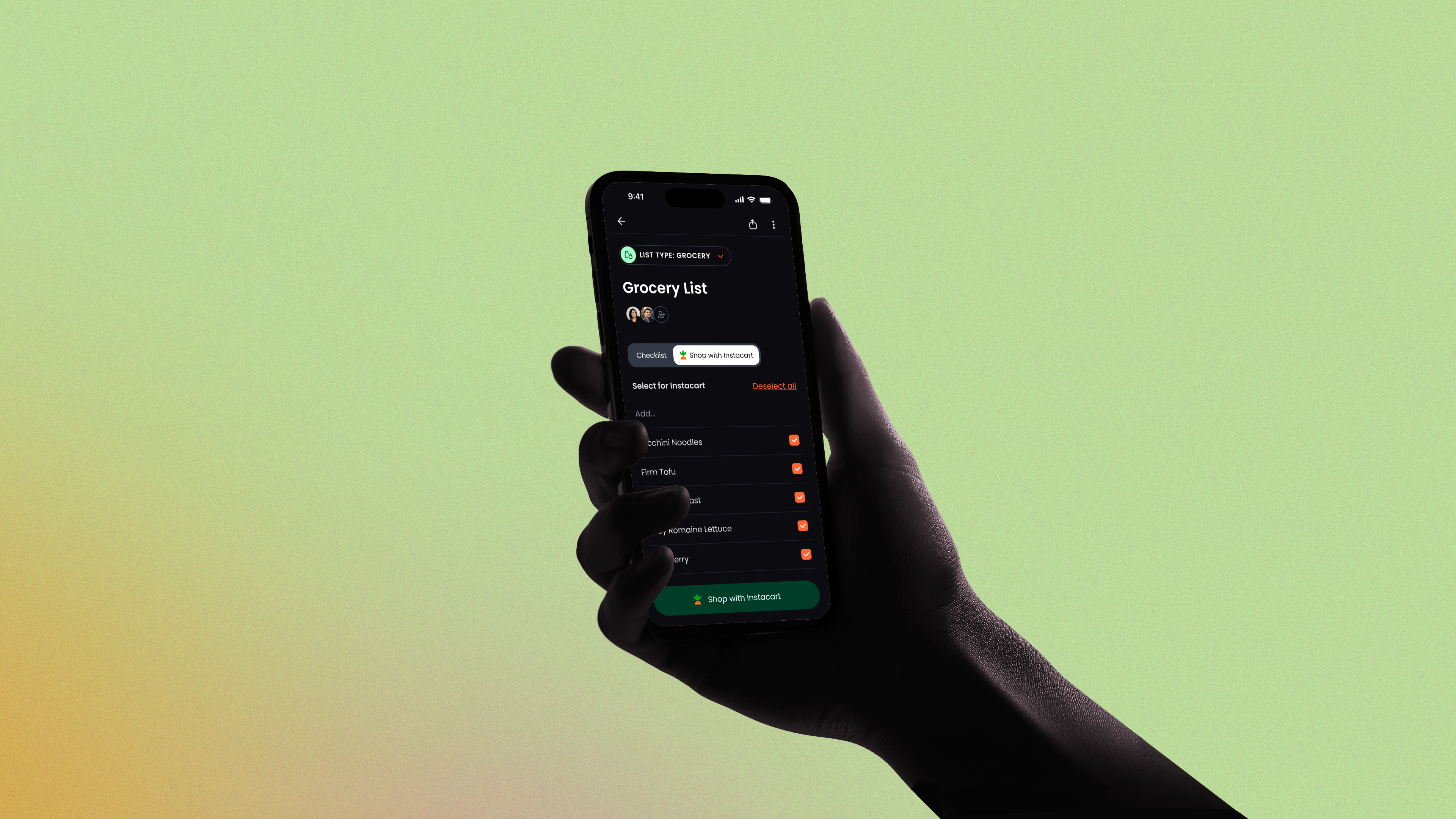
Our AI assistant helps households manage daily tasks and routines. The immediate ask was to integrate grocery shopping with Instacart.


Making lists is an effective tool for managing tasks, and grocery shopping is a repetitive, essential, high-frequency ritual — a strong starting point for engagement and retention.


But the real magic wasn’t the list itself. Instead of asking users to search for every item on Instacart, the AI assistant automatically matched each list entry to products and built a cart in one click. That single interaction turned a routine task into a moment of delight. Still, I questioned: Is that enough for people to adopt a new tool? Should this remain a one-off integration? What’s the larger vision for our AI assistant?

Is that enough for people to adopt a new tool? Should this remain a one-off integration? What’s the larger vision for our AI assistant?

""

Discovery

To find the design opportunity, I used a framework inspired by Human-Centered Design and Jake Knapp’s Design Sprint. The goal was to move the team from guessing to clarity fast.

My discovery framework:

  1. Empathize (Diverge): Understand what problems users were actually facing, not just the feature that is requested.
  2. Define (Converge): focus the scope on solvable pains.
  3. Reframe into “How Might We” (Diverge): to open up creativity and discover new opportunities.

These sessions helped us surface assumptions, align hypotheses, and visualize tensions — where users got stuck, where the business was pushing, and where design could create shared wins.

Discovery workshop artifacts: Fig jam screens from my early exploration—capturing how we empathized with users, defined the problem, and reframed opportunities into “How Might We” statements.

From Discovery to Direction

The workshop revealed three truths that shaped everything that followed:

  • People weren’t struggling to make lists, they were struggling to act on them. Lists multiplied, went stale, and became overwhelming.
  • The business needed a quick, visible win. The Instacart partnership delivered that, but risked becoming a single-purpose feature.
  • A shared pattern was emerging. Lists were quietly showing up across chores, errands, and reminders — the connective tissue of household management.

These insights reveal an opportunity to design something more foundational: lists as a system for household management, not a one-off tool for groceries.

How might we turn lists into an AI-powered foundation for household management — something immediately useful for groceries but flexible enough to grow?

This shift changed the scope and definition of success:

  • Short term: deliver a frictionless, AI-enhanced Instacart experience.
  • Long term: create a scalable list framework that could support any category—tasks, chores, packing, or shared family lists.
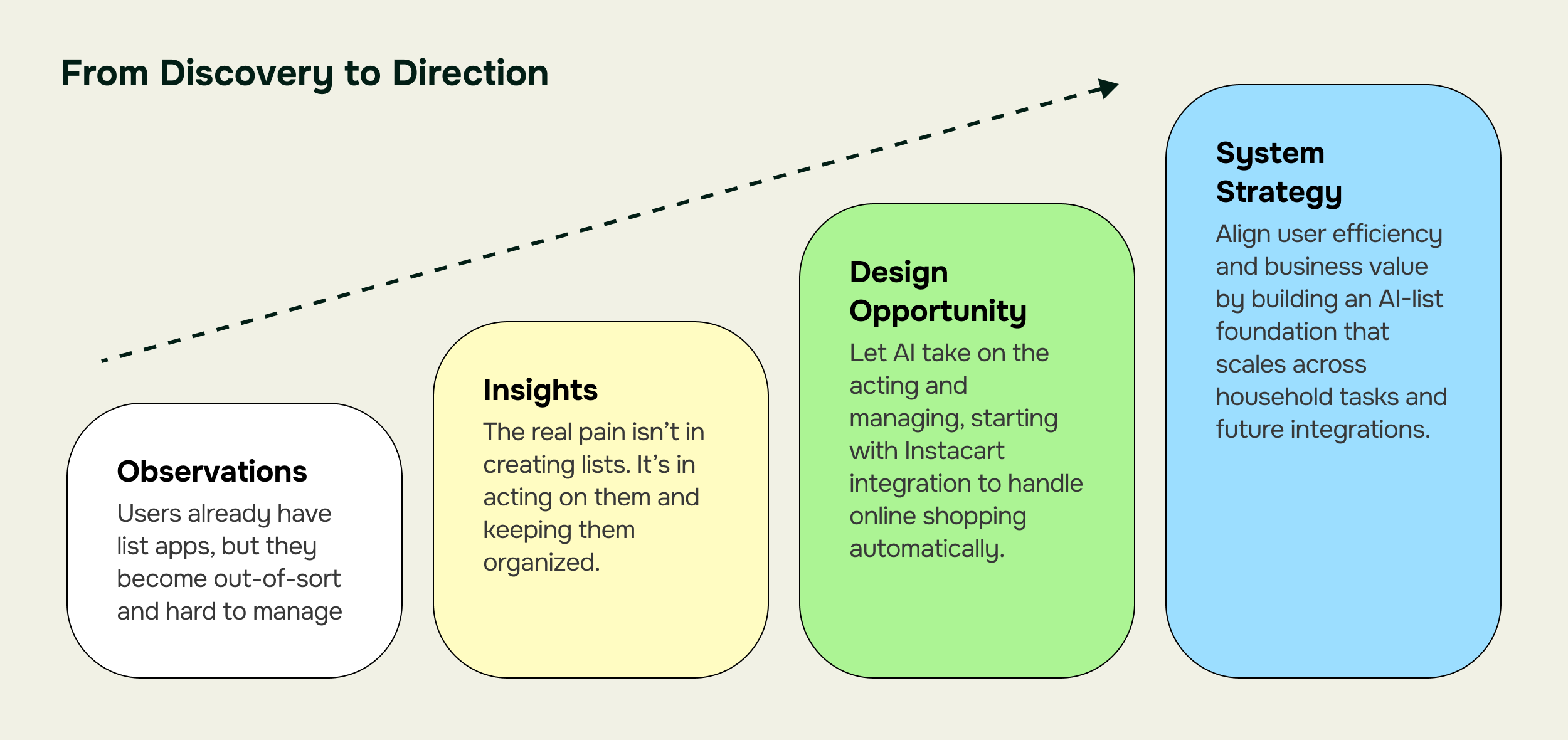
Discovery workshop artifacts: Fig jam screens from my early exploration—capturing how we empathized with users, defined the problem, and reframed opportunities into “How Might We” statements.

From Discovery to Direction: early observations evolved into insights, revealed a key design opportunity, and ultimately shaped the system strategy for our AI-powered list experience.

Design Strategy & Scope Decisions

With the direction set, my approach was simple: ship something delightful fast, but design it like it’s part of a system. That principle guided every scope decision we made.

  • Prioritize groceries and Instacart integrationIt was the fastest way to deliver business value. And because grocery shopping is a high-frequency task, it naturally supported user adoption and retention.


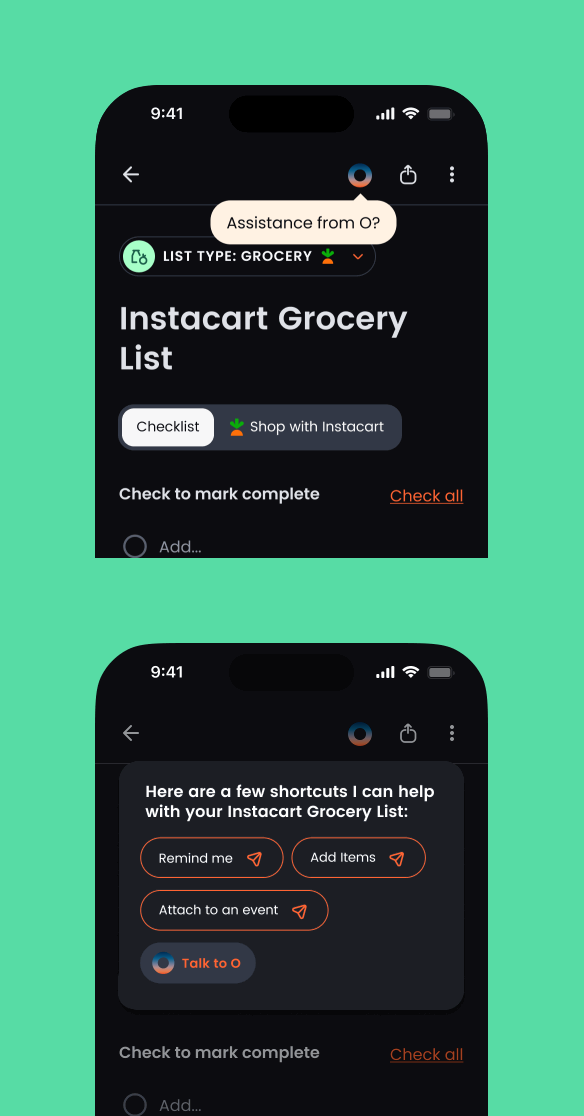
  • Deliver AI delight and make editing effortlessThe assistant handled the tedious steps — creating lists and matching items to Instacart — turning a routine task into something almost magical.Since AI-generated content always needs a human touch, I focused the UX around easy, flexible editing that felt light, not laborious.


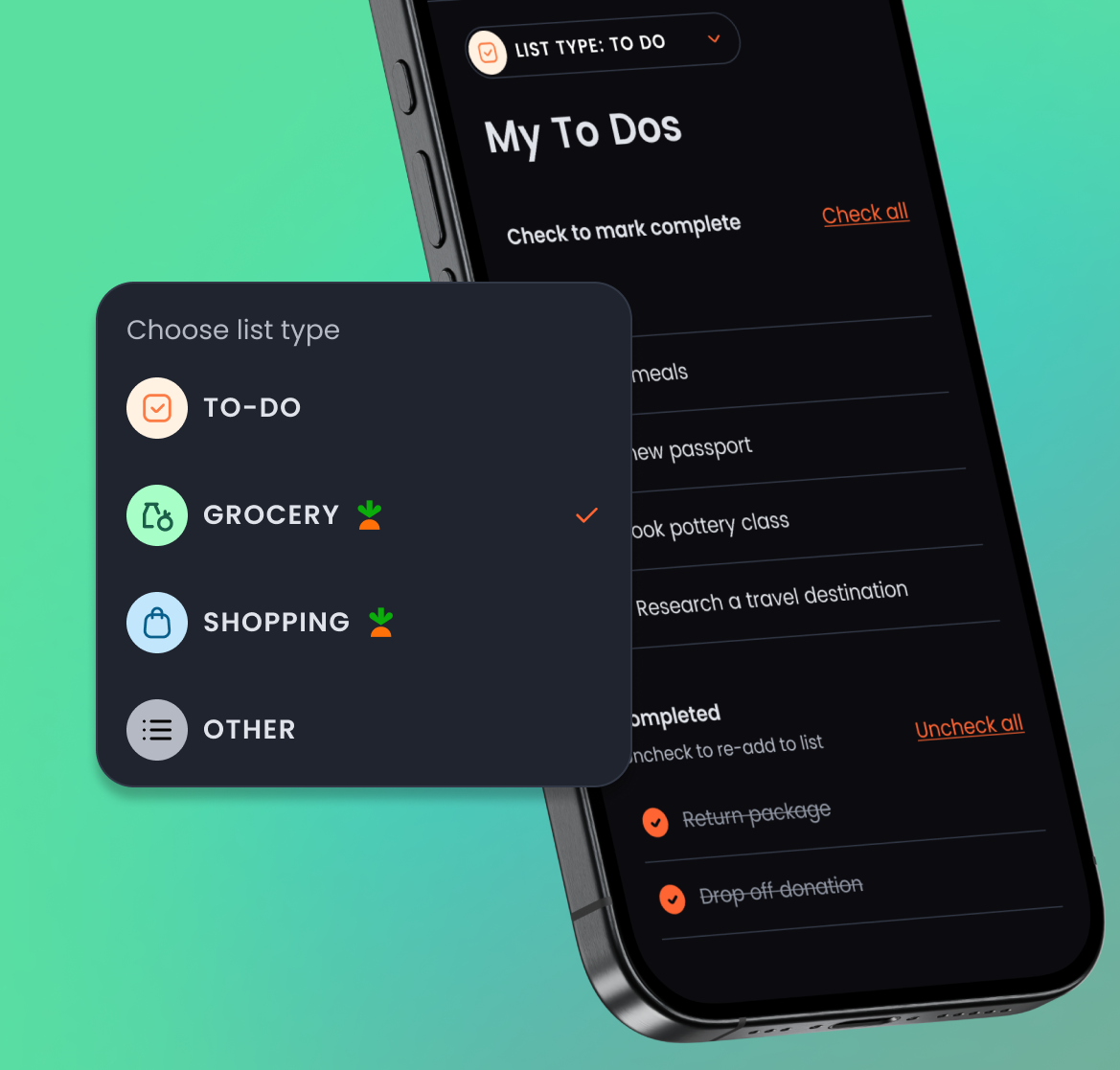
  • Think in systems — one interaction model, many list typesThe list logic and interaction design were built to handle more than groceries: chores, packing, family tasks, or anything else users needed.This avoided one-off complexity while setting the foundation for future integrations.
  • Build trust through transparencyEvery AI action was confirmed explicitly with the user, creating predictable and reusable behavior patterns for the assistant.

Trade-offs:

  • Although grocery shopping is a recurring task, we deferred advanced scheduling to a later release.
  • Features like prioritization were simplified — instead of adding complex logic, users could pin lists for quick access, reducing engineering overhead while keeping control intuitive.
  • Once single-user experiences proved successful, we planned to expand into multi-user collaboration.

These decisions allowed us to move fast without compromising the foundation. The MVP didn’t just launch a feature, it validated an interaction model we could build on.
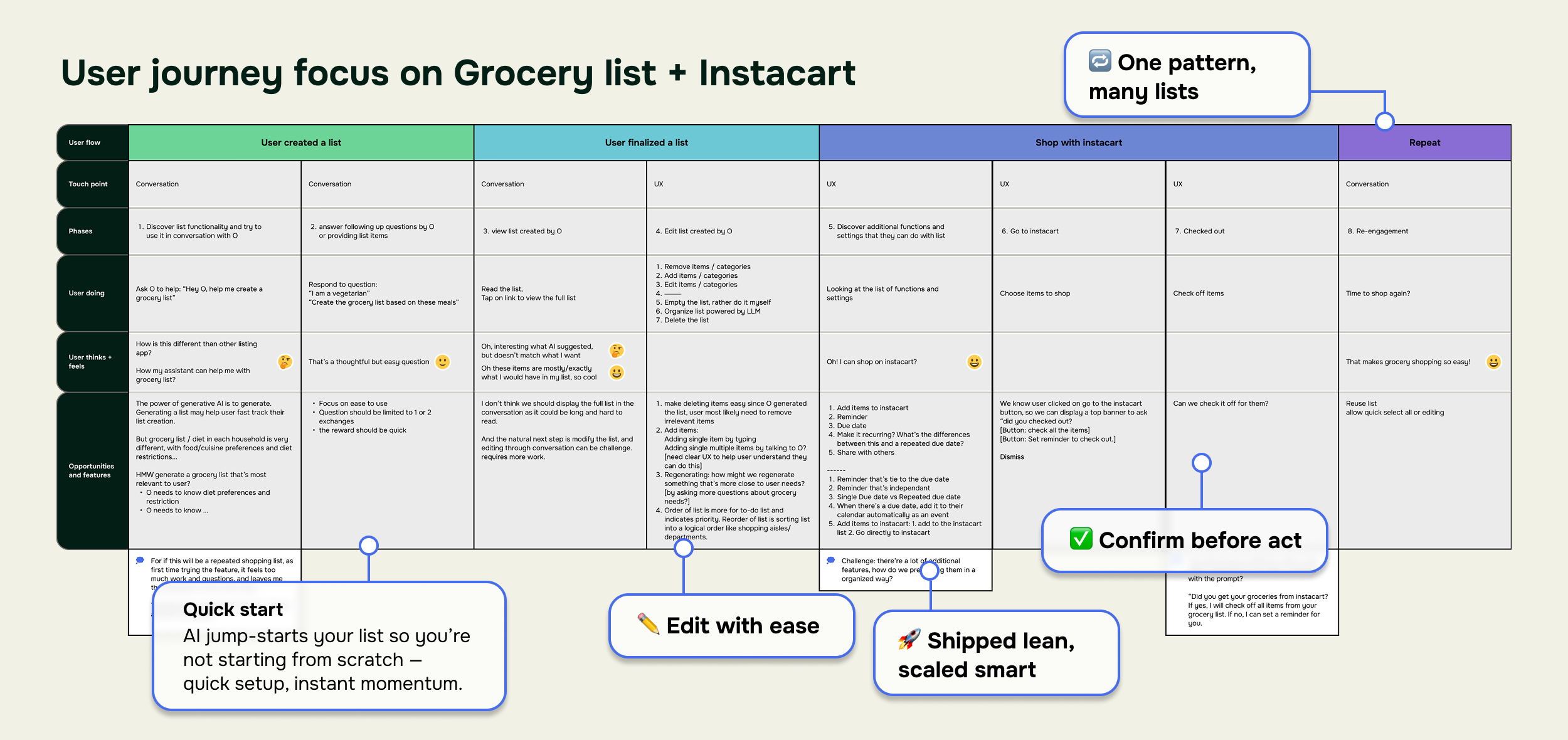
A horizontal user journey map showing how the AI assistant automates grocery list creation, simplifies editing, confirms actions transparently, and applies one interaction pattern across different list types, illustrating how design strategy guided each key moment.

User journey through AI-powered grocery flow, with key design moments that demonstrate delight, transparency, and scalability — the foundations of our system strategy.

The Scalable Solution

The final MVP brought the strategy to life: a fast, intuitive list experience that made grocery shopping feel effortless while setting the foundation for future expansion.

  • Instacart integration

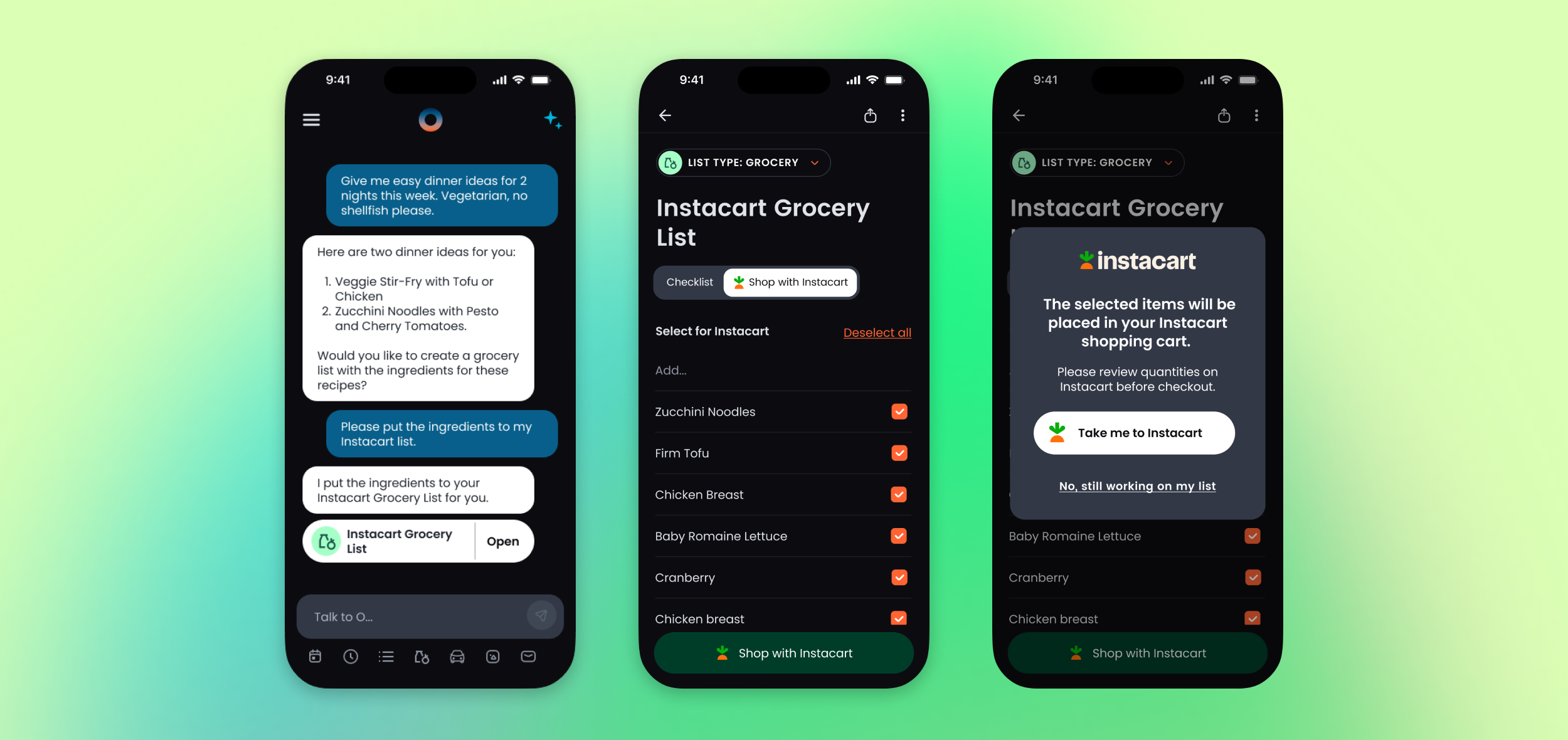
    • Partnered with engineers to work around API limits; AI auto-mapped items into Instacart’s catalog, delivering a “magic moment” for users.
  • LLM-powered list intelligence

    • Users could begin by simply asking the assistant to “make a grocery list.” AI generated a first version in seconds, jump-starting momentum instead of starting from a blank page.
    • Under the hood, LLMs classified lists by item content, enabling the system to recognize and organize list types automatically. This allowed the MVP to support not only groceries but also chores, packing, or to-do lists — without additional engineering lift.
  • AI Behavior principles

    • Every AI action was confirmed explicitly with the user, establishing a pattern of predictability and trust. This became the interaction blueprint for all future assistant behaviors.
  • Two-mode system

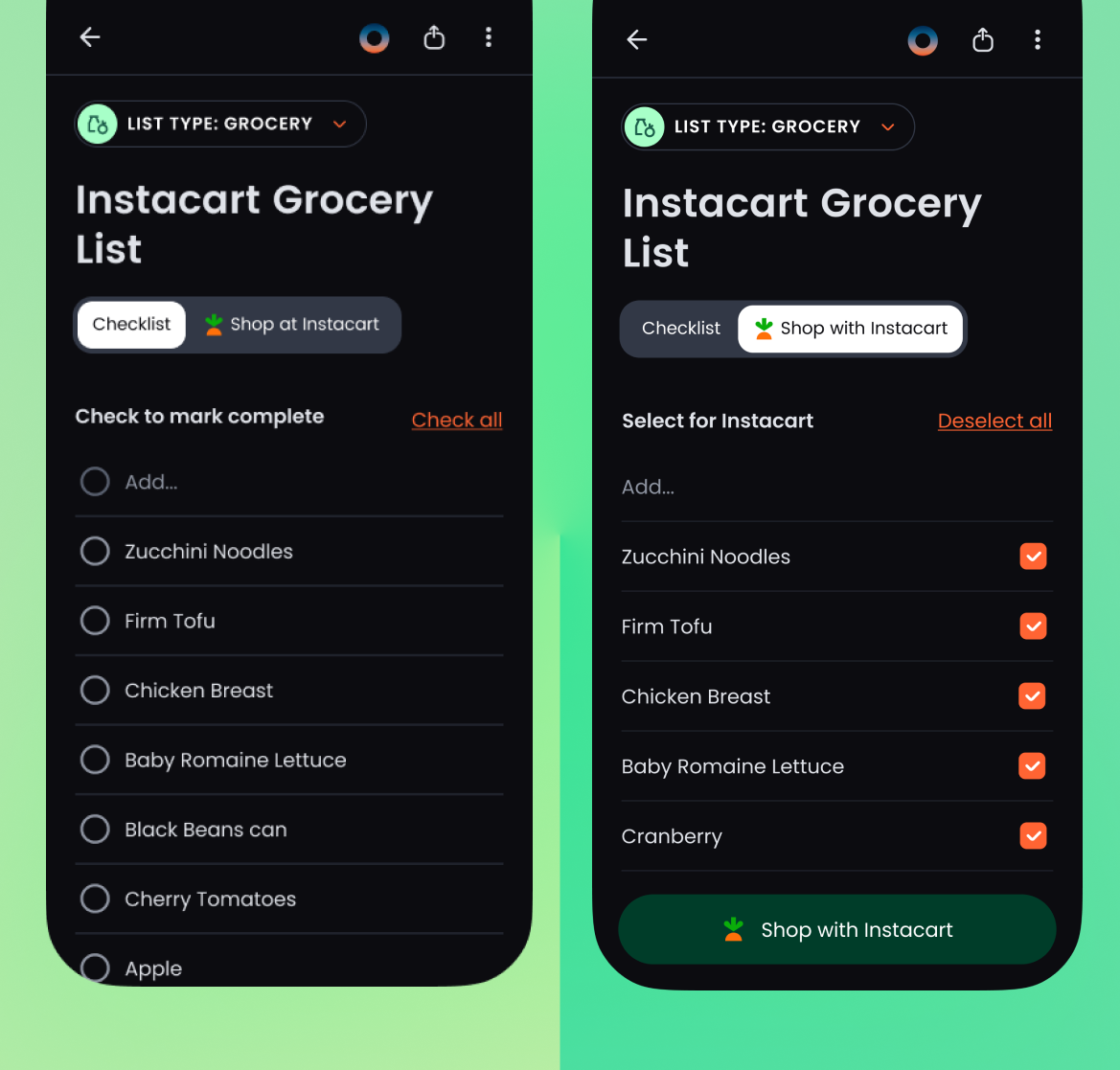
    • Instacart mode: Optimized for online checkout; immediate business impact and user delight.
    • In-store mode: A familiar list view for everyday tasks; designed to scale beyond groceries to any household need.

Together, these elements balanced short-term business value with long-term product growth.
Instacart and list product design
Graphic of a close up of a website depicting an Our Projects page with sample project names and dates.
Graphic depicting a color palette of Stone Brown, Dark Navy, Beige, and Cream White along with corresponding hex color codes.

Impact

  • User impact: 88% of active users created a list and 38% update their lists at least once weekly.
  • Business & strategic recognition: Featured in Instacart’s developer program and got a shot-out by one of the user’s podcast organically.
  • Design impact: Established AI interaction principles and reusable list logic across the product.

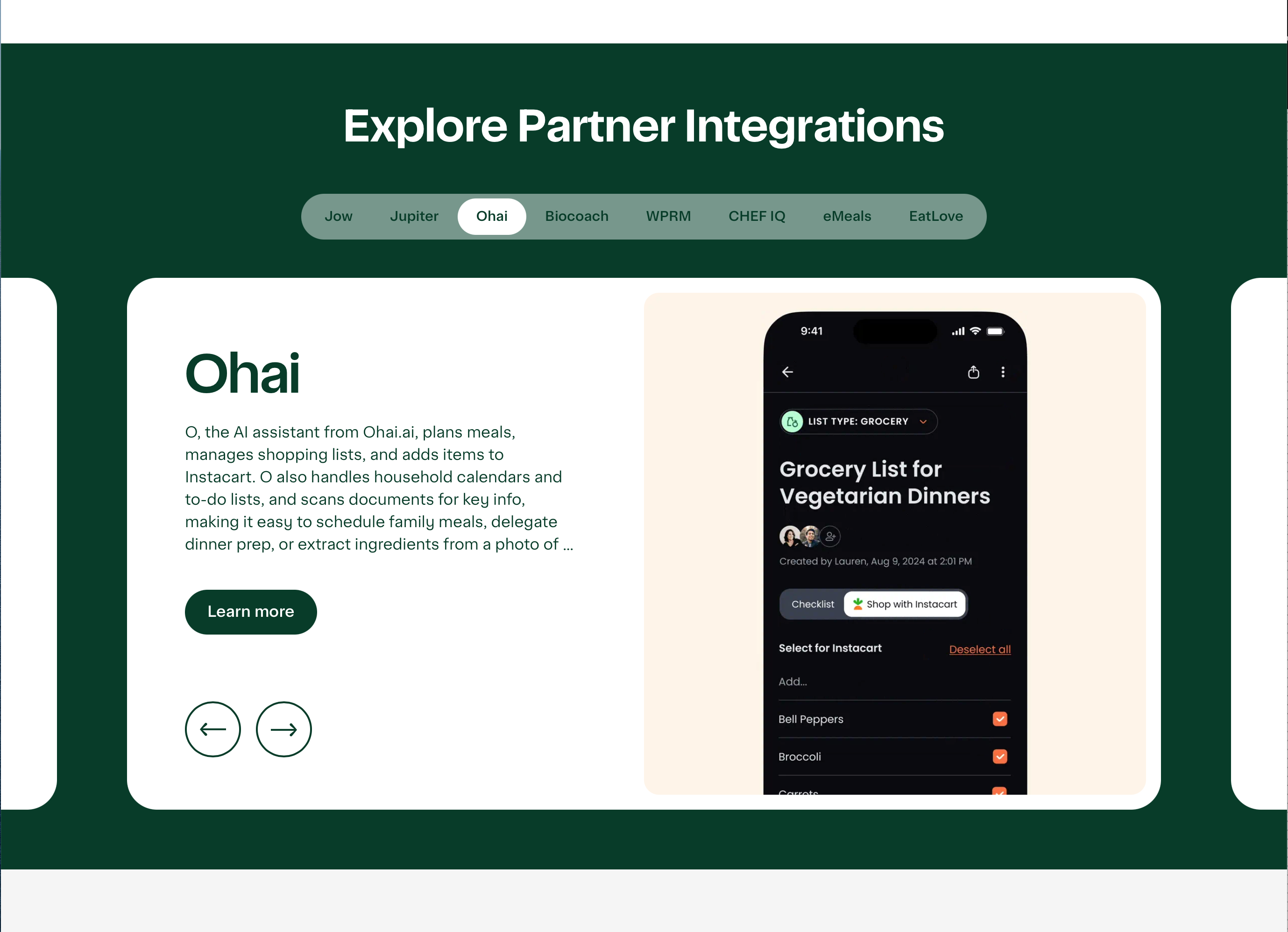
Featured in Instacart’s developer program: https://www.instacart.com/company/business/developers

An unexpected moment of validation — Ariel from the National Parents Union podcast gave Ohai a spontaneous shout-out.

Next Iteration

With strong adoption and a validated interaction model, our next focus was on depth and scalability:

  • Shared and collaborative lists to unlock household-level utility.
  • Published lists to create product-led growth.
  • Calendar integration to tie recurring tasks and due dates into daily rhythms.
  • Enhanced AI behavior for multi-list, multi-user contexts and utilize LLM to reduce clutter and organize lists for users.
  • Additional integrations like meal kits, household supplies, task management and beyond.

Each next step builds on the same foundation — predictable AI, reusable systems, and frictionless interaction design — expanding from a grocery feature into an intelligent household platform.

""

Reflection

This project reinforced a core belief of mine:

Design creates the most leverage when it defines the problem, not just the solution.

By reframing a narrow feature ask into a scalable system, we delivered an MVP that solved an immediate business goal while setting a foundation for future growth.

Other Projects

Graphic depicting a mountain peak at sunset cropped in a circle with the words RANGE CRAZY above and below.

See Project

Location icon
Location icon

Connect

with me

I love creating things that make everyday life feel a little easier, a little kinder, and a little more intentional.

Connect on

Linkedin

email to

ava.dan.liu@gmail.com

Download

My Resume

Icons

Greater Boston, MA U.S.A

© 2025 Design and content by Ava Liu

Ava Liu

Home

About

Location icon

AI-Powered Household Lists:

Turning lists from mental clutter into effortless action

MY ROLE

  • Solo Product Designer, collaborating closely with PM & engineers.
  • Shaping MVP scope for short-term impact + long-term scalability.
  • Balancing business goals with user needs, ensuring Instacart adoption while preparing the system for future growth.
  • Defining AI behavior principles used across the product.

PROJECT TIMEFRAME

The Instacart integration opportunity was approaching quickly, requiring a fast turnaround.

  • Ideation & presentation: 10 days
  • Final design execution: 10 days
Discovery workshop artifacts: Fig jam screens from my early exploration—capturing how we empathized with users, defined the problem, and reframed opportunities into “How Might We” statements.

Context

Our AI assistant helps households manage daily tasks and routines. The immediate ask was to integrate grocery shopping with Instacart.


Making lists is an effective tool for managing tasks, and grocery shopping is a repetitive, essential, high-frequency ritual — a strong starting point for engagement and retention.


But the real magic wasn’t the list itself. Instead of asking users to search for every item on Instacart, the AI assistant automatically matched each list entry to products and built a cart in one click. That single interaction turned a routine task into a moment of delight. Still, I questioned: Is that enough for people to adopt a new tool? Should this remain a one-off integration? What’s the larger vision for our AI assistant?

Is that enough for people to adopt a new tool? Should this remain a one-off integration? What’s the larger vision for our AI assistant?

""

Discovery

To find the design opportunity, I used a framework inspired by Human-Centered Design and Jake Knapp’s Design Sprint. The goal was to move the team from guessing to clarity fast.

My discovery framework:

  1. Empathize (Diverge): Understand what problems users were actually facing, not just the feature that is requested.
  2. Define (Converge): focus the scope on solvable pains.
  3. Reframe into “How Might We” (Diverge): to open up creativity and discover new opportunities.

These sessions helped us surface assumptions, align hypotheses, and visualize tensions — where users got stuck, where the business was pushing, and where design could create shared wins.

Discovery workshop artifacts: Fig jam screens from my early exploration—capturing how we empathized with users, defined the problem, and reframed opportunities into “How Might We” statements.

From Discovery to Direction

The workshop revealed three truths that shaped everything that followed:

  • People weren’t struggling to make lists, they were struggling to act on them. Lists multiplied, went stale, and became overwhelming.
  • The business needed a quick, visible win. The Instacart partnership delivered that, but risked becoming a single-purpose feature.
  • A shared pattern was emerging. Lists were quietly showing up across chores, errands, and reminders — the connective tissue of household management.

These insights reveal an opportunity to design something more foundational: lists as a system for household management, not a one-off tool for groceries.

How might we turn lists into an AI-powered foundation for household management — something immediately useful for groceries but flexible enough to grow?

This shift changed the scope and definition of success:

  • Short term: deliver a frictionless, AI-enhanced Instacart experience.
  • Long term: create a scalable list framework that could support any category—tasks, chores, packing, or shared family lists.
Discovery workshop artifacts: Fig jam screens from my early exploration—capturing how we empathized with users, defined the problem, and reframed opportunities into “How Might We” statements.

From Discovery to Direction: early observations evolved into insights, revealed a key design opportunity, and ultimately shaped the system strategy for our AI-powered list experience.

Design Strategy & Scope Decisions

With the direction set, my approach was simple: ship something delightful fast, but design it like it’s part of a system. That principle guided every scope decision we made.

  • Prioritize groceries and Instacart integrationIt was the fastest way to deliver business value. And because grocery shopping is a high-frequency task, it naturally supported user adoption and retention.


  • Deliver AI delight and make editing effortlessThe assistant handled the tedious steps — creating lists and matching items to Instacart — turning a routine task into something almost magical.Since AI-generated content always needs a human touch, I focused the UX around easy, flexible editing that felt light, not laborious.


  • Think in systems — one interaction model, many list typesThe list logic and interaction design were built to handle more than groceries: chores, packing, family tasks, or anything else users needed.This avoided one-off complexity while setting the foundation for future integrations.
  • Build trust through transparencyEvery AI action was confirmed explicitly with the user, creating predictable and reusable behavior patterns for the assistant.

Trade-offs:

  • Although grocery shopping is a recurring task, we deferred advanced scheduling to a later release.
  • Features like prioritization were simplified — instead of adding complex logic, users could pin lists for quick access, reducing engineering overhead while keeping control intuitive.
  • Once single-user experiences proved successful, we planned to expand into multi-user collaboration.

These decisions allowed us to move fast without compromising the foundation. The MVP didn’t just launch a feature, it validated an interaction model we could build on.

A horizontal user journey map showing how the AI assistant automates grocery list creation, simplifies editing, confirms actions transparently, and applies one interaction pattern across different list types, illustrating how design strategy guided each key moment.

User journey through AI-powered grocery flow, with key design moments that demonstrate delight, transparency, and scalability — the foundations of our system strategy.

The Scalable Solution

The final MVP brought the strategy to life: a fast, intuitive list experience that made grocery shopping feel effortless while setting the foundation for future expansion.

  • Instacart integration

    • Partnered with engineers to work around API limits; AI auto-mapped items into Instacart’s catalog, delivering a “magic moment” for users.
  • LLM-powered list intelligence

    • Users could begin by simply asking the assistant to “make a grocery list.” AI generated a first version in seconds, jump-starting momentum instead of starting from a blank page.
    • Under the hood, LLMs classified lists by item content, enabling the system to recognize and organize list types automatically. This allowed the MVP to support not only groceries but also chores, packing, or to-do lists — without additional engineering lift.
  • AI Behavior principles

    • Every AI action was confirmed explicitly with the user, establishing a pattern of predictability and trust. This became the interaction blueprint for all future assistant behaviors.
  • Two-mode system

    • Instacart mode: Optimized for online checkout; immediate business impact and user delight.
    • In-store mode: A familiar list view for everyday tasks; designed to scale beyond groceries to any household need.

Together, these elements balanced short-term business value with long-term product growth.
Instacart and list product design
Graphic of a close up of a website depicting an Our Projects page with sample project names and dates.
Graphic depicting a color palette of Stone Brown, Dark Navy, Beige, and Cream White along with corresponding hex color codes.

Impact

  • User impact: 88% of active users created a list and 38% update their lists at least once weekly.
  • Business & strategic recognition: Featured in Instacart’s developer program and got a shot-out by one of the user’s podcast organically.
  • Design impact: Established AI interaction principles and reusable list logic across the product.

Featured in Instacart’s developer program: https://www.instacart.com/company/business/developers

An unexpected moment of validation — Ariel from the National Parents Union podcast gave Ohai a spontaneous shout-out.

Next Iteration

With strong adoption and a validated interaction model, our next focus was on depth and scalability:

  • Shared and collaborative lists to unlock household-level utility.
  • Published lists to create product-led growth.
  • Calendar integration to tie recurring tasks and due dates into daily rhythms.
  • Enhanced AI behavior for multi-list, multi-user contexts and utilize LLM to reduce clutter and organize lists for users.
  • Additional integrations like meal kits, household supplies, task management and beyond.

Each next step builds on the same foundation — predictable AI, reusable systems, and frictionless interaction design — expanding from a grocery feature into an intelligent household platform.

""

Reflection

This project reinforced a core belief of mine:

Design creates the most leverage when it defines the problem, not just the solution.

By reframing a narrow feature ask into a scalable system, we delivered an MVP that solved an immediate business goal while setting a foundation for future growth.

Other Projects

Graphic depicting a mountain peak at sunset cropped in a circle with the words RANGE CRAZY above and below.

See Project

Location icon
Location icon

Connect with me

I love creating things that make everyday life feel a little easier, a little kinder, and a little more intentional.

Connect on

Linkedin

email to

ava.dan.liu@gmail.com

Download

My Resume

Icons

Greater Boston, MA U.S.A

© 2025 Design and content by Ava Liu

Ava Liu

Home

About

Location icon

AI-Powered Household Lists:

Turning lists from mental clutter into effortless action

MY ROLE

  • Solo Product Designer, collaborating closely with PM & engineers.
  • Shaping MVP scope for short-term impact + long-term scalability.
  • Balancing business goals with user needs, ensuring Instacart adoption while preparing the system for future growth.
  • Defining AI behavior principles used across the product.

PROJECT TIMEFRAME

The Instacart integration opportunity was approaching quickly, requiring a fast turnaround.

  • Ideation & presentation: 10 days
  • Final design execution: 10 days
List design

Context

Our AI assistant helps households manage daily tasks and routines. The immediate ask was to integrate grocery shopping with Instacart.


Making lists is an effective tool for managing tasks, and grocery shopping is a repetitive, essential, high-frequency ritual — a strong starting point for engagement and retention.


But the real magic wasn’t the list itself. Instead of asking users to search for every item on Instacart, the AI assistant automatically matched each list entry to products and built a cart in one click. That single interaction turned a routine task into a moment of delight. Still, I questioned:

Is that enough for people to adopt a new tool? Should this remain a one-off integration? What’s the larger vision for our AI assistant?

""

Discovery

To find the design opportunity, I used a framework inspired by Human-Centered Design and Jake Knapp’s Design Sprint. The goal was to move the team from guessing to clarity fast.

My discovery framework:

  1. Empathize (Diverge): Understand what problems users were actually facing, not just the feature that was requested.
  2. Define (Converge): Focus the scope on solvable, high-impact pains.
  3. Reframe into “How Might We” (Diverge): Open creative directions and uncover new opportunities.

These sessions helped us surface assumptions, align hypotheses, and visualize tensions — where users got stuck, where the business was pushing, and where design could create shared wins.

Discovery workshop artifacts: Fig jam screens from my early exploration—capturing how we empathized with users, defined the problem, and reframed opportunities into “How Might We” statements.

From Discovery to Direction

The workshop revealed three truths that shaped everything that followed:

  • People weren’t struggling to make lists, they were struggling to act on them. Lists multiplied, went stale, and became overwhelming.
  • The business needed a quick, visible win. The Instacart partnership delivered that, but risked becoming a single-purpose feature.
  • A shared pattern was emerging. Lists were quietly showing up across chores, errands, and reminders — the connective tissue of household management.

These insights reveal an opportunity to design something more foundational: lists as a system for household management, not a one-off tool for groceries.

How might we turn lists into an AI-powered foundation for household management — something immediately useful for groceries but flexible enough to grow?

This shift changed the scope and definition of success:

  • Short term: deliver a frictionless, AI-enhanced Instacart experience.
  • Long term: create a scalable list framework that could support any category—tasks, chores, packing, or shared family lists.
Discovery workshop artifacts: Fig jam screens from my early exploration—capturing how we empathized with users, defined the problem, and reframed opportunities into “How Might We” statements.

From Discovery to Direction: early observations evolved into insights, revealed a key design opportunity, and ultimately shaped the system strategy for our AI-powered list experience.

Design Strategy & Scope Decisions

With the direction set, my approach was simple: ship something delightful fast, but design it like it’s part of a system. That principle guided every scope decision we made.

  • Prioritize groceries and Instacart integrationIt was the fastest way to deliver business value. And because grocery shopping is a high-frequency task, it naturally supported user adoption and retention.


  • Deliver AI delight and make editing effortlessThe assistant handled the tedious steps — creating lists and matching items to Instacart — turning a routine task into something almost magical.Since AI-generated content always needs a human touch, I focused the UX around easy, flexible editing that felt light, not laborious.


  • Think in systems — one interaction model, many list typesThe list logic and interaction design were built to handle more than groceries: chores, packing, family tasks, or anything else users needed.This avoided one-off complexity while setting the foundation for future integrations.
  • Build trust through transparencyEvery AI action was confirmed explicitly with the user, creating predictable and reusable behavior patterns for the assistant.

Trade-offs:

  • Although grocery shopping is a recurring task, we deferred advanced scheduling to a later release.
  • Features like prioritization were simplified — instead of adding complex logic, users could pin lists for quick access, reducing engineering overhead while keeping control intuitive.
  • Once single-user experiences proved successful, we planned to expand into multi-user collaboration.

These decisions allowed us to move fast without compromising the foundation. The MVP didn’t just launch a feature, it validated an interaction model we could build on.

A horizontal user journey map showing how the AI assistant automates grocery list creation, simplifies editing, confirms actions transparently, and applies one interaction pattern across different list types, illustrating how design strategy guided each key moment.

User journey through AI-powered grocery flow, with key design moments that demonstrate delight, transparency, and scalability — the foundations of our system strategy.

The Scalable Solution

The final MVP brought the strategy to life: a fast, intuitive list experience that made grocery shopping feel effortless while setting the foundation for future expansion.

  • Instacart integration

    • Partnered with engineers to work around API limits; AI auto-mapped items into Instacart’s catalog, delivering a “magic moment” for users.
  • LLM-powered list intelligence

    • Users could begin by simply asking the assistant to “make a grocery list.” AI generated a first version in seconds, jump-starting momentum instead of starting from a blank page.
    • Under the hood, LLMs classified lists by item content, enabling the system to recognize and organize list types automatically. This allowed the MVP to support not only groceries but also chores, packing, or to-do lists — without additional engineering lift.
  • AI Behavior principles

    • Every AI action was confirmed explicitly with the user, establishing a pattern of predictability and trust. This became the interaction blueprint for all future assistant behaviors.
  • Two-mode system

    • Instacart mode: Optimized for online checkout; immediate business impact and user delight.
    • In-store mode: A familiar list view for everyday tasks; designed to scale beyond groceries to any household need.

Together, these elements balanced short-term business value with long-term product growth.
Instacart and list product design
Graphic of a close up of a website depicting an Our Projects page with sample project names and dates.
Graphic depicting a color palette of Stone Brown, Dark Navy, Beige, and Cream White along with corresponding hex color codes.

Impact

  • User impact: 88% of active users created a list and 38% update their lists at least once weekly.
  • Business & strategic recognition: Featured in Instacart’s developer program and got a shot-out by one of the user’s podcast organically.
  • Design impact: Established AI interaction principles and reusable list logic across the product.
Featured in Instacart’s developer program: https://www.instacart.com/company/business/developers

An unexpected moment of validation — Ariel from the National Parents Union podcast gave Ohai a spontaneous shout-out.

Next Iteration

With strong adoption and a validated interaction model, our next focus was on depth and scalability:

  • Shared and collaborative lists to unlock household-level utility.
  • Published lists to create product-led growth.
  • Calendar integration to tie recurring tasks and due dates into daily rhythms.
  • Enhanced AI behavior for multi-list, multi-user contexts and utilize LLM to reduce clutter and organize lists for users.
  • Additional integrations like meal kits, household supplies, task management and beyond.

Each next step builds on the same foundation — predictable AI, reusable systems, and frictionless interaction design — expanding from a grocery feature into an intelligent household platform.

""

Reflection

This project reinforced a core belief of mine:

Design creates the most leverage when it defines the problem, not just the solution.

By reframing a narrow feature ask into a scalable system, we delivered an MVP that solved an immediate business goal while setting a foundation for future growth.

Other Projects
Graphic depicting a mountain peak at sunset cropped in a circle with the words RANGE CRAZY above and below.

See Project

Location icon
Location icon

Connect with me

I love creating things that make everyday life feel a little easier, a little kinder, and a little more intentional.

Connect on

Linkedin

email to

ava.dan.liu@gmail.com

Download

My Resume

Icons

Greater Boston, MA U.S.A

© 2025 Design and content by Ava Liu